Safety
Carbon monoxide boiler symptoms in Belgium: detectors & rules
Invisible and odourless, carbon monoxide still kills people in Belgium every year. Symptoms, sources in the home, EN 50291 detectors, regional rules and what to do in an emergency.
· 11 min read · L'équipe technique VCN Energy
Carbon monoxide (CO) is an invisible, odourless gas produced by incomplete combustion: a boiler, gas water heater or stove that is badly adjusted, badly connected or starved of air can release it into your home. The first symptoms of CO poisoning (headache, dizziness, nausea, tiredness) feel like flu and often affect several people in the same home at once. If in doubt: air the room, switch the appliance off, get out and call 112.
What is carbon monoxide and why is it dangerous?
Carbon monoxide is a colourless, odourless, non-irritating gas that forms when a fuel burns without enough oxygen: natural gas, heating oil (mazout in French, stookolie in Dutch), wood, pellets or coal. Once inhaled, it takes the place of oxygen in your blood, and the brain and heart suffer first.
Without treatment, it takes 3 to 4 hours to clear half of the CO absorbed; oxygen through a mask cuts that to 30 to 40 minutes (Belgian Poison Centre). Anyone who may have been poisoned should be seen by emergency services, even if they feel better outdoors.
Where does CO come from in a Belgian home?
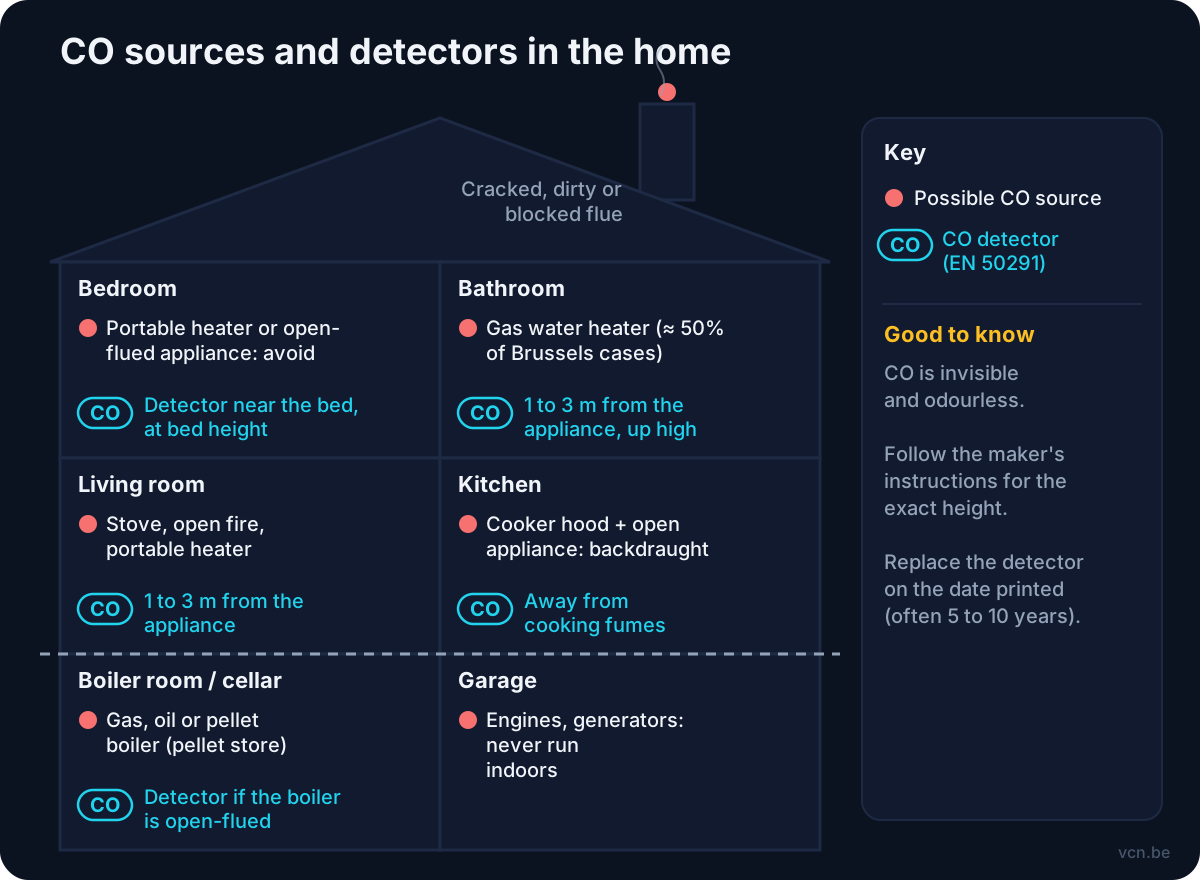
Any combustion appliance can produce CO if it is badly adjusted, dirty, poorly connected or short of fresh air.
Gas and oil boilers
An "atmospheric" or open-flued boiler (a type B appliance) takes its combustion air from the room and sends its fumes up a chimney that relies on natural draught. If the room lacks air, the flue is blocked or the draught reverses, fumes spill back into the home. Brussels Environment describes atmospheric boilers and type B11BS appliances as outdated and higher-risk.
Most recent condensing boilers are room-sealed (type C): they draw air from outside and vent through a balanced flue. A loose flue, a failed seal or a badly tuned burner can still cause CO.
Gas water heaters, especially flueless ones
Small instantaneous gas water heaters without a flue (often called a "geyser" in Belgium) release their fumes straight into the room. The Belgian Poison Centre stresses that they must never heat water for a shower or bath, need two ventilation openings of at least 150 cm² (one low, one high), and must never run at the same time as a cooker hood.
Bathrooms stack up the risks: small room, closed door, vents sometimes taped over. According to the Brussels awareness campaign of October 2025, about 50% of poisonings happen there.
Stoves, open fires and portable heaters
Stoves, open fires, gas convector heaters, paraffin or bioethanol heaters all consume oxygen from the room. Flueless portable heaters are particularly dangerous in a bedroom, because a sleeping person does not realise they are breathing CO (Belgian Poison Centre).
Engines, generators, pellets and chimneys
- Never run a generator, lawnmower or car in an enclosed space, garage included: exhaust fumes can contain up to 8% CO (Belgian Poison Centre). The same goes for a barbecue.
- Pellets stored in a closed space can release CO through spontaneous oxidation: ventilate a closed pellet store before going in.
- A cracked, dirty or bird's-nest-blocked chimney stops fumes escaping. Belgium's Royal Meteorological Institute (RMI) adds that chimneys draw less well in still, misty weather, and that poisonings rise with the first frosts.
How many CO poisonings are there in Belgium?
Most figures come from the Belgian Poison Centre (Centre Antipoisons / Antigifcentrum), via hospital emergency departments; mild cases often go unnoticed.
| Indicator | Figure | Source and date |
|---|---|---|
| Victims in Belgium | 478 in 2023 | Poison Centre, quoted by L'Avenir (18 November 2024) |
| Deaths in Belgium | 15 in 2023; 19 a year on average over 2018–2023 | Same |
| Poisonings in the Brussels Region | Over 120 a year (2 to 3 a week) | Brussels Environment, Sibelga, Poison Centre and Fire Brigade campaign (15 October 2025) |
| Deaths in Brussels | 4 in 2024 | Same |
| Most affected room | Bathroom: about 50% of Brussels cases | Same |
In October 2021, the federal Civil Security service spoke of "nearly a thousand" people poisoned by CO each year. Counts vary, but the risk period always runs from October to March (RMI).
What are the symptoms of carbon monoxide poisoning?
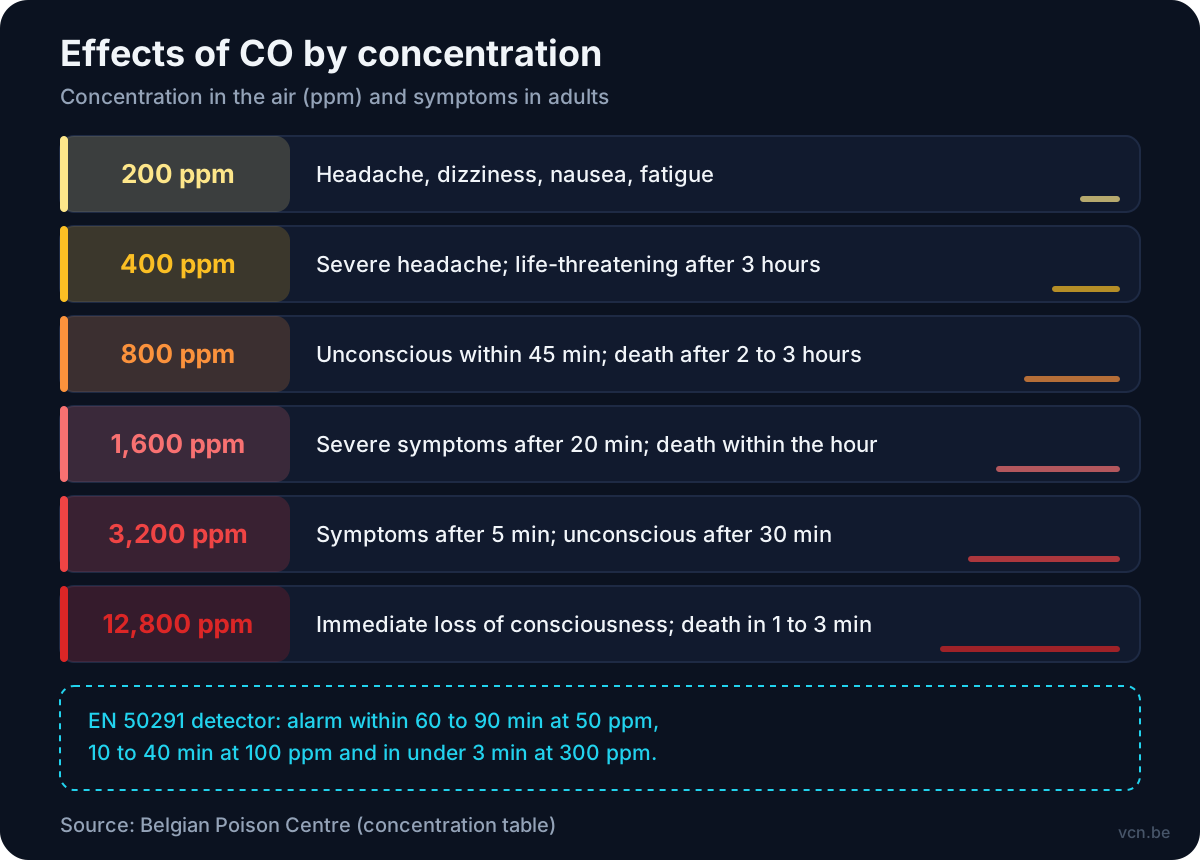
At low doses, symptoms are ordinary and therefore misleading:
- headache, dizziness, nausea, vomiting, unusual tiredness;
- blurred vision or poor concentration, chest or muscle pain (Sibelga, the Brussels gas and electricity network operator);
- weakness, shortness of breath, confusion, then loss of consciousness and coma (Belgian Poison Centre).
Three clues point to CO rather than flu: several people or pets feel unwell at the same time; symptoms ease when you leave the house; they appear in one room or when an appliance is running (Belgian Burns Foundation).
Long-term exposure to low doses can cause chronic poisoning, and acute poisoning can leave delayed neurological effects, so medical follow-up matters.
Who is most at risk?
According to the Belgian Poison Centre: pregnant women (the foetus takes up CO more readily), young children, older people, and people with heart or lung conditions, anaemia or thyroid problems. Anyone asleep cannot feel the first symptoms.
What should you do immediately if you suspect CO poisoning?
If a detector goes off or several people have symptoms, do not wait: the Belgian Poison Centre asks you to call 112 immediately.
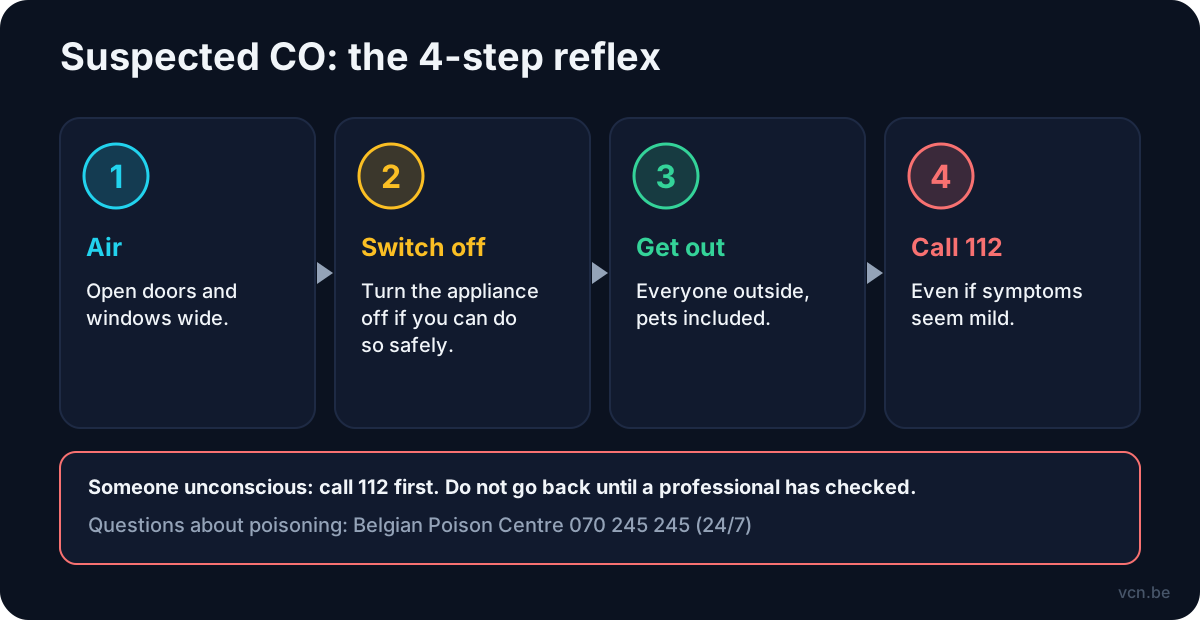
- Air the room: open doors and windows wide.
- Switch off the suspect appliance, only if you can do so without staying in the room.
- Get out with everyone, pets included.
- Call 112, even if symptoms seem mild: oxygen treatment may be needed.
If someone is unconscious, call 112 first. Do not use the appliance again until a professional has checked it.
Which warning signs should you look for on your boiler or water heater?
Poor combustion often leaves traces (Belgian Poison Centre, Civil Security):
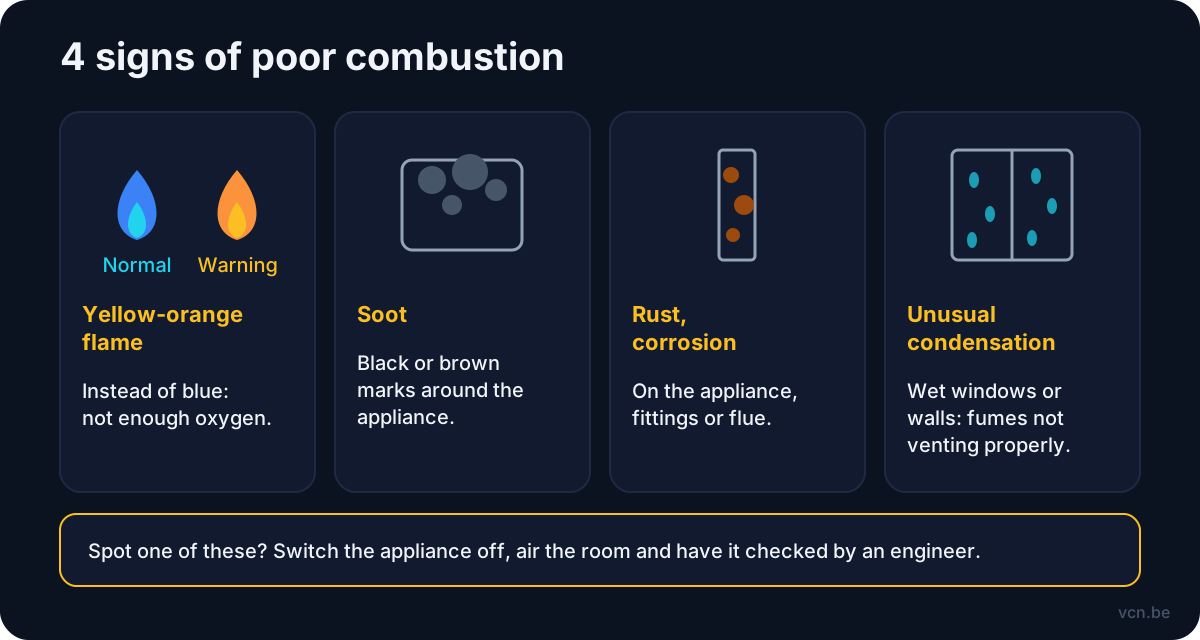
- a yellow or orange flame instead of a blue one on a gas appliance (oxygen shortage);
- soot or black marks around the appliance or flue;
- rust or corrosion on the appliance or its fittings;
- unusual condensation on windows or walls (fumes not venting properly);
- cracks or condensation marks on the chimney, for instance in the loft.
If you spot any of these, switch the appliance off, air the room and have it checked before using it again: book a boiler repair. If anyone has symptoms, call 112 first.
CO detectors: which one to buy and where to put it?
Choose a CE-marked detector certified to EN 50291 (NBN EN 50291-1 for homes), ideally with a label such as BOSEC, NF, TÜV, Q-label or VdS (Civil Security). The Brussels Region recommends a lifespan of 5 to 10 years; Belgian consumer association Test-Achats/Test-Aankoop says detection weakens after about 5 years. Test it monthly.
The standard requires an alarm within 60 to 90 minutes at 50 ppm, 10 to 40 minutes at 100 ppm and under 3 minutes at 300 ppm. A detector warns you before the dose becomes dangerous, but it does not replace servicing.
Where should a CO detector go?
- In every room with an open-flued combustion appliance: atmospheric boiler, water heater, stove, open fire.
- Between 1 and 3 metres (horizontally) from the appliance, never directly above or opposite it, to avoid false alarms (Civil Security, Test-Achats).
- High up: in a test quoted by Test-Achats, the reading after 15 minutes was 1,330 ppm at 2.20 m against 140 ppm at 1.20 m.
- In bedrooms, close to the bed and at bed height (Civil Security).
- Away from draughts, hobs, sinks and room corners.
Height instructions vary between models: follow the manufacturer's manual.
CO detector or smoke detector: what is the difference?
| Criterion | Smoke detector | CO detector |
|---|---|---|
| What it detects | Smoke particles from a fire | Carbon monoxide, with no smell or smoke |
| Standard | NBN EN 14604 | EN 50291 |
| Mandatory in September 2026? | Yes, in all three regions | No, in no region (private homes) |
| Typical location | Hallway, landings, every occupied floor | Rooms with a combustion appliance, bedrooms |
| Lifespan | Up to 10 years (Brussels rule, rented homes) | 5 to 10 years depending on the model |
One does not replace the other, and even a combined unit is not always in the ideal spot for both risks (Belgian Burns Foundation).
Is a CO detector mandatory in Brussels, Wallonia or Flanders?
As of September 2026, no Belgian region requires a CO detector in a private home. The legal duties concern smoke detectors, boiler servicing and, in Brussels and Flanders, open-flued appliances.
| Rule | Brussels | Wallonia | Flanders |
|---|---|---|---|
| Gas boiler | EPB inspection every 2 years, water heater included | Inspection every 3 years (up to 100 kW) | Service every 2 years |
| Oil, wood, pellets | Every year | Every year | Every year |
| Smoke detector | Mandatory in all homes since January 2025 | Mandatory (rules in place since 2004) | Mandatory in all homes since 1 January 2020 |
| CO detector | Not mandatory | Not mandatory | Not mandatory |
| Open-flued (type B) appliances | Banned in bedrooms of rented homes since 1 January 2026 | No specific rule found: check with the Walloon authorities | Some no longer allowed in bedrooms (housing quality standards) |
In Brussels the periodic check is called the contrôle périodique PEB (EPB inspection) and must be done by a certified technician. Since 1 January 2026, the landlord of a rented home is responsible for the whole heating and hot-water system. If you rent, ask your landlord for the latest inspection certificate.
How can you prevent carbon monoxide poisoning?
Have your appliances serviced
Brussels Environment's main advice is to have your boiler and water heater inspected periodically by a professional. Stick at least to the legal interval; for an old or atmospheric appliance, or one in a bathroom, a yearly service is a sensible precaution. At VCN Energy, in September 2026, a gas boiler service costs €159 including VAT, an oil boiler service €209 and a pellet boiler service €240.
Keep ventilation permanent
Never block ventilation grilles: opening a window now and then is not enough, a continuous air supply is needed (Brussels Environment). After new windows or insulation work, check that open-flued appliances still get enough air; well-designed ventilation solves the problem at source.
Cooker hood plus atmospheric boiler
A cooker hood that extracts outside puts the house under negative pressure. If an open-flued (type B) appliance shares the space, the draught can reverse and pull fumes back in; that is why the Poison Centre forbids running a hood at the same time as a flueless water heater. Solutions include a fresh-air inlet, a draught test with the hood running, or a boiler replacement with a room-sealed (type C) unit.
Chimneys and everyday habits
- Have the chimney checked before the boiler inspection (Brussels Environment); chimney sweeping removes soot, blockages and nests.
- Never run a generator, barbecue or engine indoors.
- Flueless portable heaters: short use only, in a ventilated room, never overnight in a bedroom.
- Fit a CO detector certified to EN 50291 and test it monthly.
Servicing and combustion analysis: what does the engineer check?
In Wallonia, the inspection certificate comes with the combustion analyser printout: CO in the flue gases, O₂ or CO₂, flue-gas temperature and efficiency (SPW Énergie). In Flanders, the service includes checking the flue, the combustion air and the combustion itself.
In practice, the engineer cleans the burner and heat exchanger, checks the flue and air supply, runs the combustion analysis, adjusts the burner if CO is too high and gives you a certificate. The analysis catches deteriorating combustion before it becomes dangerous.
To stop worrying about deadlines, the VCN ONE plan includes the annual service and an automatic reminder (gas: from €149 a year on the Basic plan).
Our advice as heating engineers
Prevention comes down to three simple habits: have your appliances serviced at the legal interval (yearly if they are old), never block the air supply, and fit a certified CO detector near open-flued appliances and bedrooms.
VCN Energy works across Walloon Brabant, Brussels and Wallonia. To schedule a service or have a suspect appliance checked, book online or call 010 80 20 92.
Frequently asked questions
What are the first symptoms of carbon monoxide poisoning from a boiler?
The first symptoms are headache, dizziness, nausea and unusual tiredness, which feel like flu. They often affect several people in the same home at once and ease when you go outside. At higher doses come confusion and loss of consciousness. If in doubt, air the room, get out and call 112, as the Belgian Poison Centre advises.
Can a condensing boiler produce carbon monoxide?
Yes. A room-sealed condensing boiler (type C) draws its air from outside and vents fumes through a balanced flue, which greatly reduces the risk indoors. But a loose flue, a failed seal or a badly tuned burner can still let CO escape. Periodic servicing with a combustion analysis is therefore still needed for every type of boiler.
Is a carbon monoxide detector mandatory in Belgium?
No. As of September 2026, neither Brussels, Wallonia nor Flanders requires a CO detector in a private home. Only smoke detectors are compulsory; in Brussels they have been required in all homes since January 2025. Authorities and fire services still recommend an EN 50291 CO detector in every room with an open-flued combustion appliance.
Where should I put a CO detector near a boiler?
Place it in the boiler room, 1 to 3 metres horizontally from the appliance, high up and never directly above or opposite it, to avoid false alarms. Keep it away from draughts, hobs and room corners. In bedrooms, fit it close to the bed and at bed height. Always follow the manufacturer's instructions, as height guidance varies between models.
What should I do if my CO alarm goes off?
Open doors and windows at once, switch off the combustion appliance if you can do so without staying in the room, get everyone outside, pets included, and call 112, especially if anyone has a headache, nausea or dizziness. Do not go back inside or restart the appliance until a qualified professional has checked it.
How often should a boiler be serviced to prevent carbon monoxide in Belgium?
The legal interval depends on your region and fuel. Oil, wood and pellet boilers must be serviced every year everywhere. Gas boilers must be checked every 2 years in Brussels and Flanders, and every 3 years in Wallonia for boilers up to 100 kW. For an old or atmospheric appliance, a yearly service remains a sensible precaution.
Sources
- Monoxyde de carbone (FR) — Belgian Poison Centre
- Le monoxyde de carbone en détail (FR) — Belgian Poison Centre
- CO risks room by room (FR) — Belgian Poison Centre
- CO prevention leaflet (FR) — Belgian Poison Centre
- CO-vergiftiging (NL) — Belgian Poison Centre
- 478 victims and 15 deaths in 2023 (18/11/2024, FR) — L'Avenir
- Awareness campaign against carbon monoxide poisoning (15/10/2025) — Sibelga
- Carbon monoxide (FR) — Sibelga
- CO awareness campaign press release (15/10/2025, FR) — Brussels Environment
- Preventing CO poisoning (FR) — Brussels Environment
- EPB periodic boiler inspection (FR) — Brussels Environment
- New minimum quality standards from 2026 — Brussels-Capital Region
- CO safety advice — Brussels-Capital Region
- How to prevent carbon monoxide (CO) poisoning — City of Brussels
- Smoke detectors mandatory in Brussels (FR) — City of Brussels
- Boiler and burner servicing (FR) — SPW Énergie, Wallonia
- Smoke detectors in your home (FR) — Wallonie.be
- Periodic servicing of heating appliances (NL) — Flemish Department of Environment
- Housing quality: technical installations (NL) — Flemish Government
- Housing quality: smoke detectors (NL) — Flemish Government
- Winter is coming, watch out for CO (28/10/2021, FR) — Civil Security, FPS Interior
- CO, an insidious killer in the home (FR) — Royal Meteorological Institute
- Where and how to place a CO detector (FR) — Test-Achats
- CO poisoning (FR) — Belgian Burns Foundation
- EN 50291 alarm thresholds (FR) — Safetygas