Energy
ETS2 carbon tax 2027: the impact on your heating bill
From 1 January 2027, Europe's ETS2 hits gas and heating oil: between €154 and €325 more a year for an average household. What this means in practice and why planning ahead pays off.
· 8 min read · L'équipe technique VCN Energy
From 1 January 2027, a new European carbon market, ETS2, will apply to suppliers of natural gas and heating oil, as well as road fuels. Unlike VAT or regional grants, this measure does not come from a Belgian region but from the European Union, and it will directly affect the price of gas and heating oil billed to households from 2027 onward.
What exactly is ETS2?
ETS2 is the expanded version of the European carbon market (ETS), until now limited to heavy industry and electricity. From 1 January 2027, it also covers suppliers of fuels used to heat buildings (natural gas, heating oil) and for road transport (petrol, diesel). Households do not buy carbon allowances directly: energy suppliers do, and they pass this extra cost on to the final price charged to customers, like any other price component.
How much this will cost on a heating bill
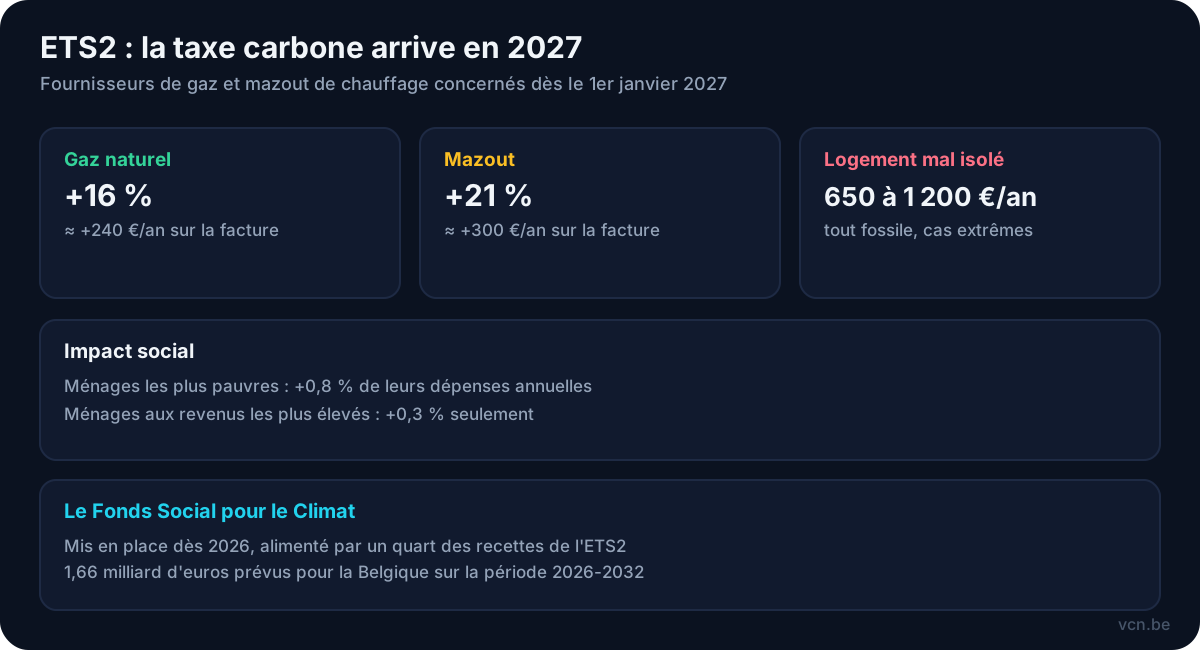
Estimates reported in the economic press point to a heating bill increase of between €154 and €325 a year for an average Belgian household, broken down by fuel: roughly +16% for natural gas (around +€240 a year) and +21% for heating oil (around +€300 a year). For the least well-insulated homes, heated solely with gas or oil, the bill climbs further: some estimates mention up to €650, even €1,200 more a year in the worst cases.
An impact that does not hit everyone equally
ETS2 weighs proportionally more on lower-income households: one estimate cites a 0.8% rise in annual spending for the poorest families, against just 0.3% for the highest-income households. The difference is simple to explain: heating takes up a larger share of a modest household's budget, especially if the home is poorly insulated and consumption cannot easily be cut.
The Social Climate Fund, a partial offset
To cushion this shock, a Social Climate Fund is being set up from 2026, funded by a quarter of the revenue generated by ETS2. For Belgium, the planned envelope reaches €1.66 billion over 2026-2032, meant to support vulnerable households and fund energy renovation measures. This fund does not cancel the price rise, it softens its effect for part of the population — the concrete payout arrangements in Belgium are still to be clarified through 2026 and 2027.
Why plan now rather than in 2027
A rise of +16% to +21% on top of the existing bill changes the payback calculation for a heating replacement. A heat pump, already helped by 6% VAT and unaffected by ETS2 since it burns no gas or oil, sees its economic edge grow automatically as fossil fuel prices rise. A heat pump installation project started before 2027 is financed against fuel prices still close to today's levels; started after, it compares against a fossil bill already loaded with ETS2. For anyone still weighing whether to replace a gas boiler or keep it a few more years, the 21% VAT rules on fossil boilers also belong in that calculation.
In the meantime, servicing beats absorbing the rise
Even before ETS2 takes effect, a poorly serviced boiler already burns more fuel than necessary. At VCN Energy, heating oil boiler servicing costs €209 excl. VAT (price listed in October 2026), or it is included in the VCN ONE oil plan from €18.99 a month. Book a service online or ask for a heat pump quote on 010 80 20 92 to compare both billing paths before 2027.
Frequently asked questions
Is ETS2 a new Belgian tax?
No. ETS2 is a European emissions trading system that applies to fossil fuel suppliers for heating and road transport from 1 January 2027. It is then passed through into the price charged in Belgium as elsewhere in Europe.
Who actually pays for ETS2?
Formally, fuel suppliers buy the emission allowances. In practice, this cost is passed on to the selling price of gas and heating oil, and so onto the final consumer's bill.
How much will my heating bill rise?
Estimates point to +16% for gas (around +€240/year) and +21% for heating oil (around +€300/year) for an average household, with sharper increases — up to €650 or €1,200/year — for poorly insulated homes heated solely with fossil fuel.
Is there support to offset this increase?
A Social Climate Fund is being set up from 2026, funded by a quarter of ETS2 revenue, with a €1.66 billion envelope for Belgium over 2026-2032. The exact payout arrangements are still to be confirmed.
Does a heat pump escape ETS2?
Yes, to the extent that it burns no gas or oil: ETS2 covers fossil fuels, not electricity. A heat pump remains subject to electricity's own prices and taxes, however.
Sources
- La taxe carbone européenne coûte jusqu'à 650 euros par an aux familles belges — BusinessAM
- Facture d'énergie plus chère à partir de 2028 : tout ce qu'il faut savoir sur le prix européen du carbone — Test-Achats
- Pourquoi cette nouvelle taxe ? — Selectra
- ETS 2: will the future carbon market drive up your energy bills? — Connaissance des Énergies
- CEPAG analysis — ETS2 — CEPAG