
Energy
Energy prices in Belgium ahead of winter 2026-2027
Gas, oil, pellets, electricity: where prices stand in early October 2026, and what it means for choosing between a gas boiler and a heat pump before the heating season.
· 9 min read · L'équipe technique VCN Energy
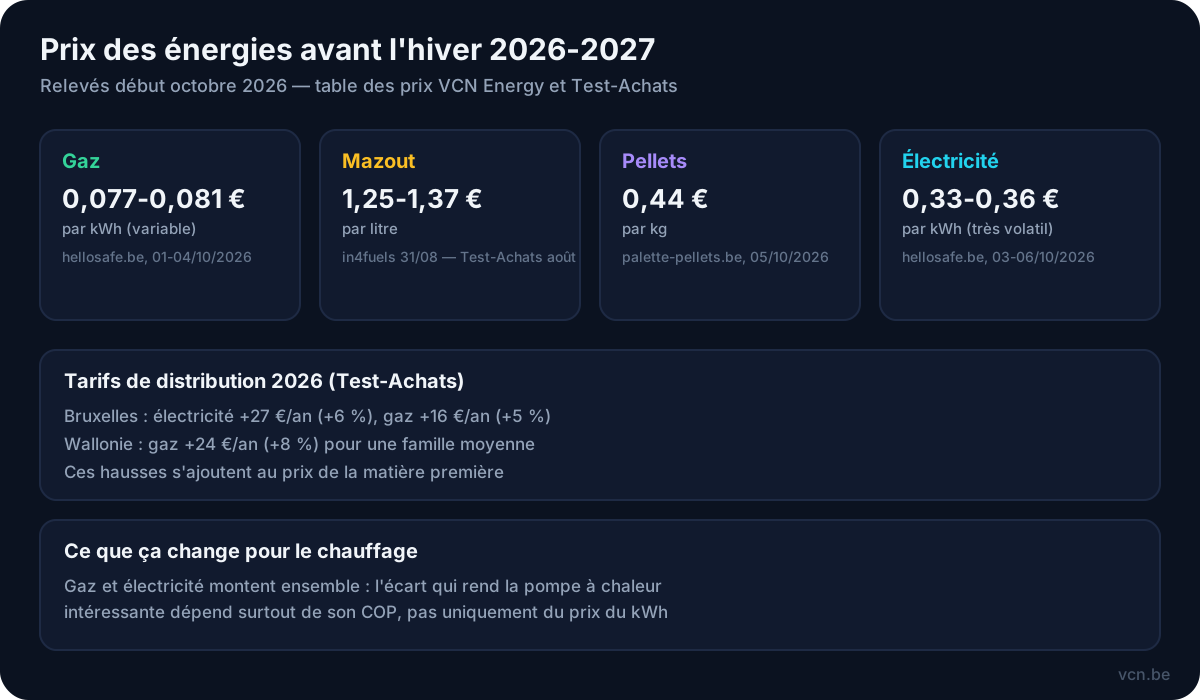
Before switching on the heating for winter 2026-2027, it helps to know where prices stand. In early October 2026, variable gas hovers around €0.077 to €0.081/kWh, heating oil between €1.25 and €1.37/L depending on the source, pellets at €0.44/kg, and electricity between €0.33 and €0.36/kWh depending on the simulator. On top of that, distribution tariffs are rising in all three regions.
Gas: a variable price that moved a lot in a few weeks
VCN Energy's price table shows variable gas rising from €0.0616/kWh on 16 September 2026 to €0.081/kWh on 27 September, before falling back toward €0.077/kWh in early October. Such swings of over 20% within days apply to contracts indexed to wholesale markets; a fixed contract signed earlier in the year can show a very different price. Before winter, it's worth checking whether your contract is fixed or variable, and since when.
Heating oil: two methods, two figures, one rule of thumb
Two sources give different figures for heating oil: €1.2535/L at end of August 2026 per in4fuels.be (classic reference price), against a Test-Achats average of €1.37/L for deliveries of 2,000 litres or more, which aggregates more suppliers. The gap is a reminder of a simple rule: heating oil prices vary sharply by supplier, order volume and timing. Comparing several quotes before filling the tank remains the most cost-effective move, well ahead of choosing a boiler type.
Pellets: a steadier price, but a yearly cost to plan for
At €0.4367/kg in early October 2026, pellet prices stay noticeably steadier week to week than gas or electricity. For a typical annual consumption of 3 to 5 tonnes in a single-family home, the fuel bill runs to roughly €1,300-€2,200 a year at this rate — useful for comparing running costs against a heat pump or gas boiler, beyond the appliance's purchase price alone.
Electricity: the most volatile price of all
In early October 2026 readings, the variable electricity price swung between €0.33 and €0.3644/kWh from one day to the next, with daily swings sometimes exceeding 9%. That volatility matters twice as much for anyone considering a heat pump: electricity powers the unit, so the ratio between its price and gas's directly drives the bill, far more than the price shown on any single day.
Distribution tariffs are also rising in 2026
Beyond the energy price itself, grid tariffs are climbing: an average Brussels family will pay about €27 more for electricity (+6%) and €16 more for gas (+5%) in 2026, while a Walloon family will see its gas distribution bill rise by about €24 (+8%), according to figures cited by Test-Achats. These increases add on top of the raw energy price, whether fixed or variable.
What this means for choosing a heating system
This price picture does not crown a universal winner: gas remains allowed and cheap to install in an existing home, but it is fossil, taxed at 21% VAT and grant-free. A heat pump benefits from 6% VAT and an efficiency (COP) that turns each unit of electricity into 3 to 4 units of usable heat, which changes the calculation even when electricity costs more per kWh than gas. The right sums are done home by home, with heat pump installation compared against your current boiler's real running cost.
Cutting the bill this winter, before any new equipment
Before any appliance change, a proper service remains the fastest lever: a badly tuned boiler burns more fuel for the same comfort. Gas boiler servicing costs €159 excl. VAT at VCN Energy (price listed in October 2026), and the VCN ONE Basic gas plan from €13.99 a month includes it along with the annual reminder, so you never miss servicing before the heating season. Book online or call 010 80 20 92.
Frequently asked questions
Why are there two different prices for heating oil?
Because the sources measure different things: in4fuels.be tracks a reference price (€1.2535/L at end of August 2026), while Test-Achats computes an average over deliveries of 2,000 litres or more (€1.37/L). The real price always depends on the supplier and the volume ordered.
Will gas prices fall further before winter?
No source allows that to be confirmed: variable gas swung between €0.06 and €0.081/kWh within a few weeks in early October 2026. A fixed contract protects against these swings, but at the price locked in when it was signed.
Are pellets really cheaper than heating oil?
At €0.4367/kg in early October 2026, generally yes, but the comparison depends on the appliance's efficiency and the home's actual annual consumption. A proper figure requires knowing the building's power needs and insulation.
Why is electricity so volatile in these readings?
Because the variable tariffs tracked here reflect market simulators that pass through wholesale prices day by day. A standard residential contract usually smooths these swings over a longer period.
Should I switch boilers because of rising distribution tariffs?
Not for that reason alone: distribution increases (5% to 8% depending on the region) weigh on every energy source. The decision to replace equipment should rest on the boiler's condition, the home and the overall project, not a single line on the bill.
Sources
- VCN Energy
energy_pricestable (gas, heating oil, pellets, electricity), readings from 26/08/2026 to 06/10/2026 — primary sources hellosafe.be, in4fuels.be, palette-pellets.be - Gaz, pellet, électricité, mazout... Voici l'évolution du prix d'1 kWh d'énergie en Belgique — Test-Achats
- Votre facture de gaz ou d'électricité va-t-elle augmenter ou baisser en 2026 ? — Test-Achats
- ⚠️ Contexte actuel : tensions sur les prix du mazout — CallMePower