Heating
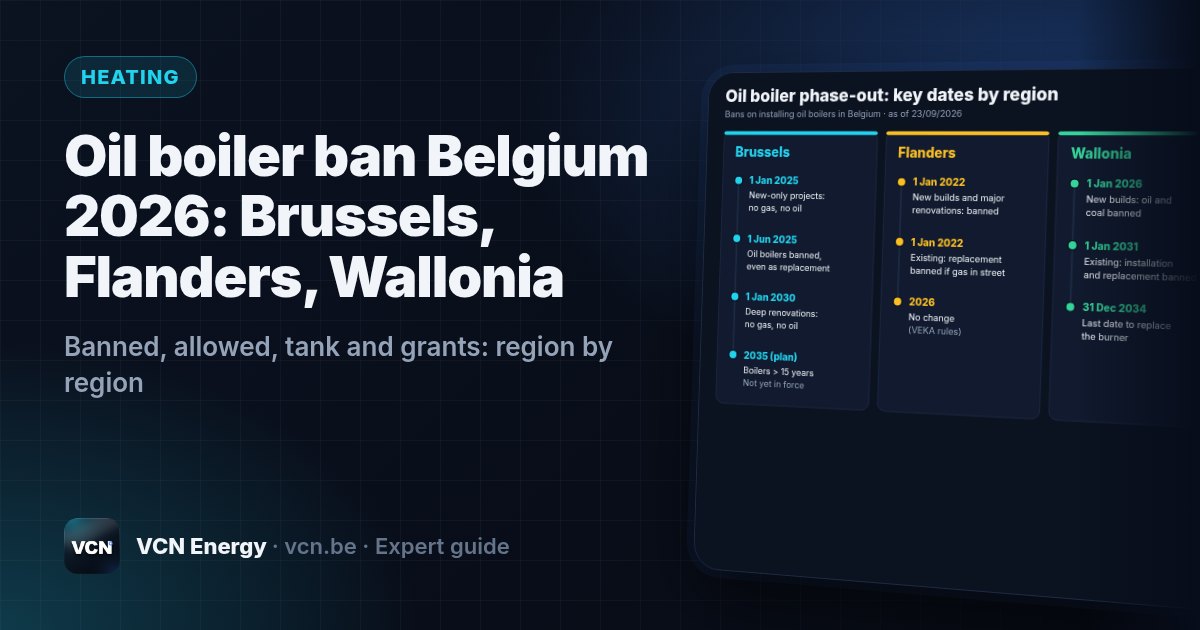
Oil boiler ban Belgium 2026: Brussels, Flanders, Wallonia
Brussels has banned new oil boilers since June 2025, Flanders since 2022 where gas is in the street, and Wallonia in new builds since 2026, with existing homes following in 2031. What you can keep, what to do with your tank, the alternatives and support available in September 2026.
· 11 min read · L'équipe technique VCN Energy
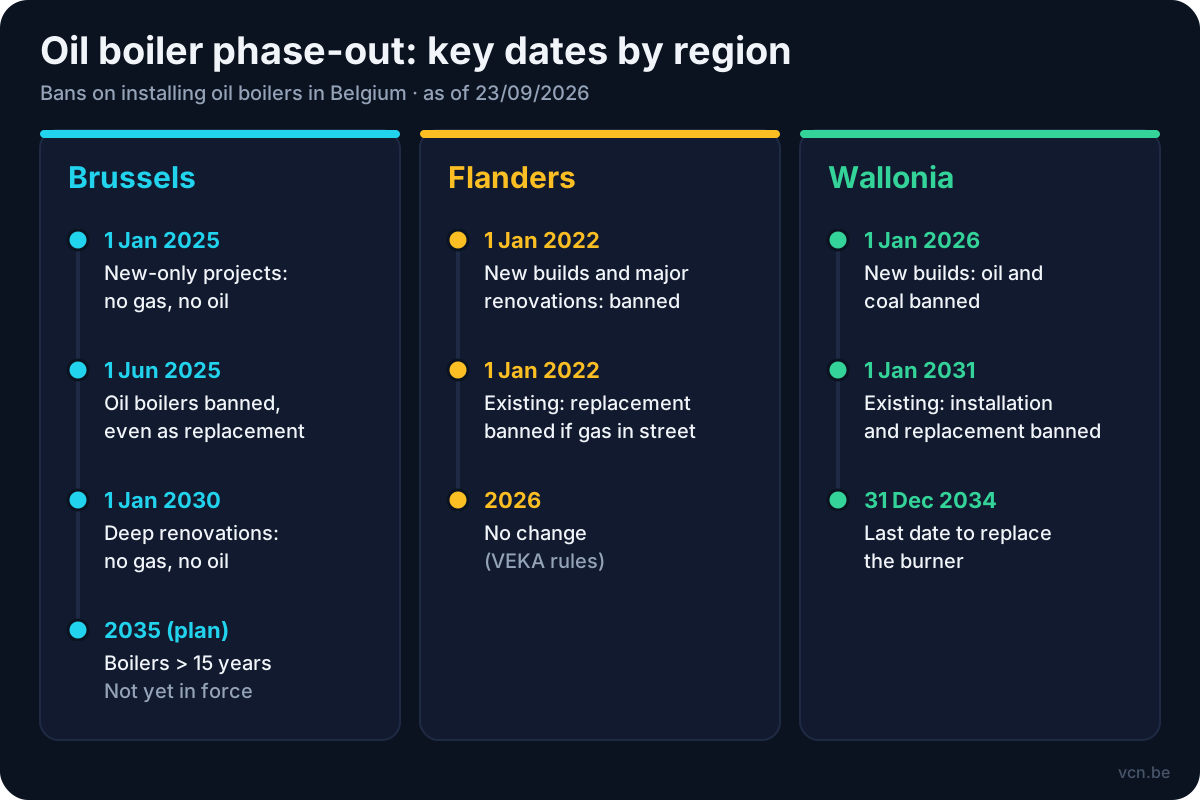
As of September 2026, no Belgian region forces you to remove a working oil boiler: you can keep it, service it and have it repaired. What is banned is installing a new one. In Brussels, that has applied since 1 June 2025, even as a replacement; in Flanders, since 2022 for new builds and for replacements where a gas main runs down the street; in Wallonia, since 1 January 2026 for new buildings. For existing homes in Wallonia, the replacement ban has been postponed to 1 January 2031.
What does the law say in 2026, region by region?
A quick vocabulary note first. In Belgium, heating oil is called mazout (French) or stookolie (Dutch), and the building energy rules are known as PEB or EPB. Heating rules are set by the three regions, so each has its own timetable. Here is the situation on 23 September 2026.
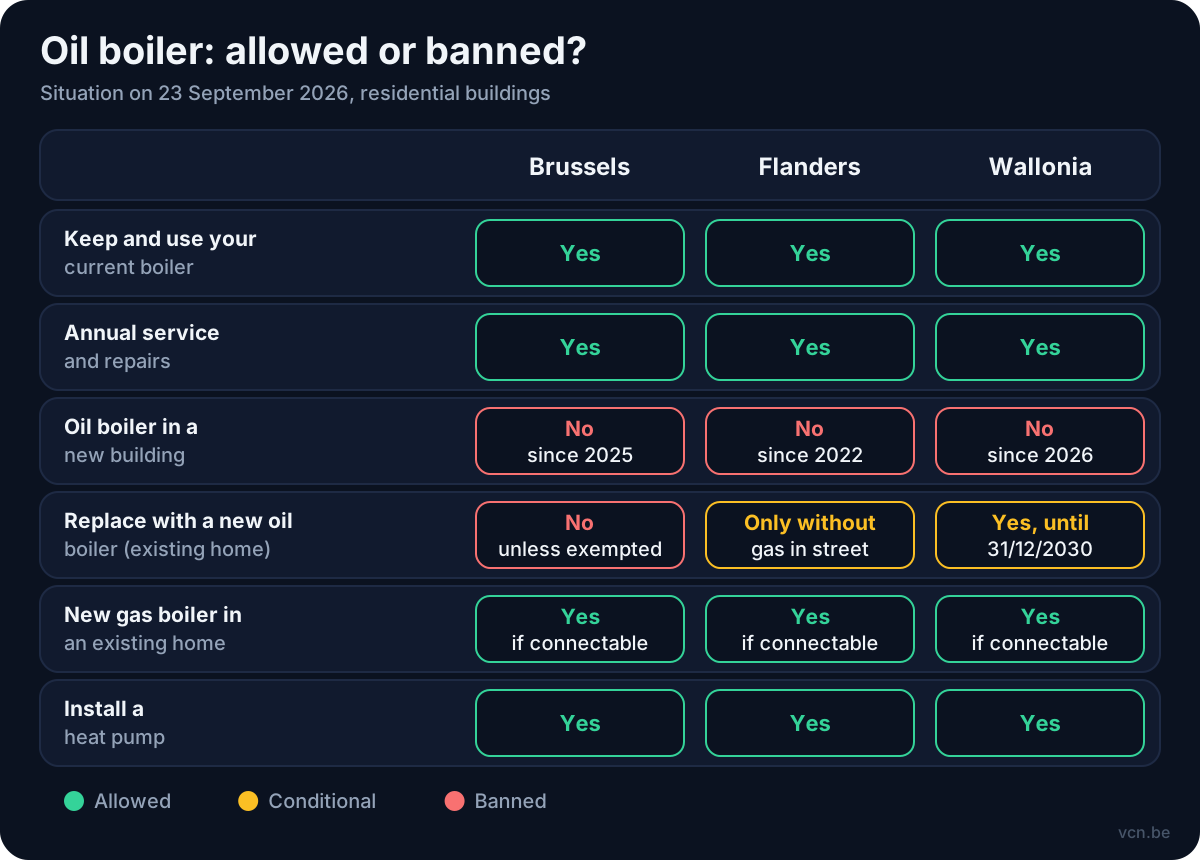
| Situation | Brussels | Flanders | Wallonia |
|---|---|---|---|
| Oil boiler in a new building | Banned (projects with only new units, planning application filed from 1/1/2025) | Banned (permit requested from 1/1/2022, also for major energy renovations) | Banned (permit application received after 31/12/2025) |
| Replacing an oil boiler with a new one (existing building) | Banned since 1/6/2025 unless exempted | Banned if natural gas is available in the street | Allowed until 31/12/2030 |
| Keeping, servicing and repairing your current boiler | Yes | Yes | Yes |
| Way out | Exemption (technical, functional, economic or heritage reasons) | No gas in the street: oil replacement still allowed | Exemption (technical, economic or functional reasons) |
Brussels: no new oil boilers since 1 June 2025
Brussels has the strictest rules. Since 1 June 2025 (date of installation), oil boilers may no longer be installed, including as a replacement, whether the appliance is new or second-hand. If your oil boiler breaks down beyond repair today, the replacement will have to run on something else, unless you obtain an exemption.
New builds and deep renovations: no oil, no gas
Since 1 January 2025 (date the planning application is filed), projects made up only of new PEB units may not include any gas or oil heat generator. From 1 January 2030, this extends to projects that include heavily renovated units.
Exemptions and the 2035 horizon
Partial or full exemptions are possible for technical, functional, economic or heritage-conservation reasons, under a Brussels government decree of 6 June 2024. Brussels Environment also mentions the goal of no longer allowing the use of oil boilers older than 15 years in 2035. That measure is not in force yet: it still needs an implementing decree.
Flanders: the VEKA oil boiler ban has applied since 2022
In Flanders, nothing changed in 2026. The ban stems from the Flemish decree of 22 October 2021 amending the Energy Decree, and the Constitutional Court dismissed the challenge against it (judgment 41/2023 of 9 March 2023). The Flemish Energy and Climate Agency (VEKA) oversees the rules.
- New builds and major energy renovations: no oil boiler if the permit was requested on or after 1 January 2022.
- Existing building with gas in the street: replacing an oil boiler with another oil boiler is banned, including replacing just the boiler body.
- Existing building without gas in the street: replacing it with a new oil boiler is still allowed.
Repairs remain possible. To check whether your address can be connected to gas, ask the grid operator Fluvius.
Wallonia: banned in new builds since 2026, in existing homes from 2031
Wallonia is where 2026 brought the biggest news. Since 1 January 2026, a building to be constructed or rebuilt may no longer have heating or hot water running on heating oil or coal; this applies to permit applications received after 31 December 2025.
The ban for existing buildings was also originally set for 1 January 2026. In early July 2026, it was postponed through an amendment to the 2026 budget adjustment decree. According to the Walloon energy administration (SPW Énergie), installing or replacing an oil boiler in an existing building will be banned from 1 January 2031. Replacing the burner stays allowed until 31 December 2034, and exemptions are planned where alternatives are not technically, economically or functionally feasible.
What is still allowed: keep, service, repair
No region requires you to remove a working oil boiler in 2026. You can keep using it and keep buying heating oil. What does remain is compulsory servicing by a certified technician: once a year for oil boilers (in Flanders, from 20 kW). If you rent, replacing the boiler is your landlord's decision, but check your lease to see who books the annual service.
At VCN Energy, an oil boiler service costs €209 including VAT (price shown on vcn.be in September 2026), or it is included in the VCN ONE plan for oil boilers from €199 a year.
What should you do with your heating oil tank?
The tank has its own regional rules. As long as you heat with oil, it must stay compliant; if you switch, it must be decommissioned properly, because a forgotten tank remains a soil pollution risk.
Brussels: declaration and checks for buried tanks
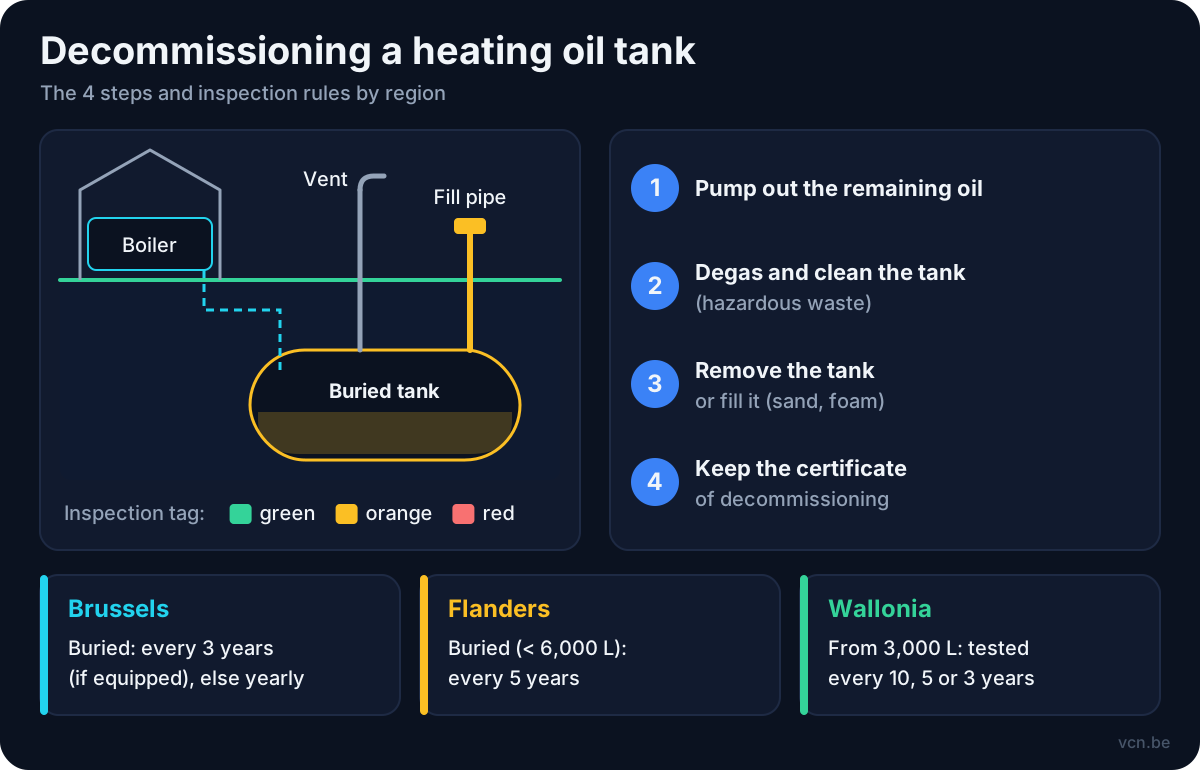
An above-ground tank under 3,000 litres needs no declaration or permit. A buried tank up to 10,000 litres, or an above-ground tank of 3,000 to 10,000 litres, must be declared to your commune (municipality); above 10,000 litres, an environmental permit is required. Buried tanks are checked every 3 years if fitted with safety equipment (double wall, leak detection, overfill prevention), otherwise every year.
Flanders and Wallonia in brief
In Flanders, a private buried tank (under 5,000 kg, about 6,000 litres) must be inspected every 5 years by a certified tank technician; above-ground tanks no longer need periodic checks since 1 March 2009. In Wallonia, the rules apply from 3,000 litres: a single-wall buried tank is tested every 10, 5 or 3 years depending on its age, a double-wall one every 10 years. In both regions, a red inspection tag means the tank may not be filled.
How to decommission an oil tank
- Have the remaining heating oil pumped out by a specialist company.
- Have the tank degassed and cleaned; the residues are hazardous waste.
- Have the tank removed. If that is impossible (access, building stability), it is filled with sand, foam or another inert material.
- Keep the certificate. In Brussels, notify the competent authority by registered letter beforehand, and for tanks over 10,000 litres, a soil survey is required within 6 months.
What can replace an oil boiler?
The right choice depends on insulation, heat emitters (radiators or underfloor heating), access to gas and available space.
| Option | Pros | Cons | Where allowed? |
|---|---|---|---|
| Air-to-water heat pump | No fuel or tank on site; 6% VAT under conditions; grants in Flanders | Needs a reasonably insulated home and suitable emitters; outdoor unit (space, noise); higher upfront cost | Everywhere |
| Hybrid heat pump | Backup for very cold days; existing radiators often kept | Two appliances to service; new oil backup boiler banned in Brussels and in Flanders with gas | Everywhere with a gas backup; new oil backup only in Wallonia until 2030 or Flanders without gas |
| Gas condensing boiler | Simple works; radiators kept; moderate purchase price | Gas main needed; fossil fuel; 21% VAT; no grants | Existing buildings in all three regions |
| Pellet boiler | Renewable fuel; high water temperatures possible; old tank room reusable | Storage space; deliveries; more maintenance; fine particles in cities | Everywhere (ecodesign-compliant appliances only in Brussels) |
Heat pump or hybrid?
An air-to-water heat pump is most economical when water circulates at low temperature, so check insulation and emitters first, for example low-temperature radiators. A hybrid heat pump added next to your existing boiler is not a new oil boiler: an option where replacement is already banned, but have your installer confirm the setup against your region's rules.
Gas or pellets?
A gas boiler is still allowed in existing homes and needs little work, but it is a fossil fuel with no grants and 21% VAT: sensible in some homes, not a thirty-year choice. Without gas, and in a home that is hard to insulate, a pellet boiler is often the most natural alternative, provided you have room for fuel storage.
Grants and VAT in September 2026
VAT
- New gas or oil boiler in a home older than 10 years: 21% since 29 July 2025 (circular 2025/C/47). Repairs and servicing of an existing boiler stay at 6%.
- Hybrid installation: a flat-rate split is possible (for example 35% of the invoice at 21% and 65% at 6%).
- Heat pump supplied and installed by the contractor: 6% in a private home older than 10 years; for new homes or homes under 10 years old, 6% from 1 January 2026 to 31 December 2030 under the royal decree announced in late 2025 (confirm with the FPS Finance).
Regional grants
- Brussels: the Renolution grants are suspended, and as of 14 September 2026 no government decision had set up new support. The Ecoreno loan remains available.
- Flanders: since 1 March 2026, income categories 1 and 2 only qualify for heat pump grants under Mijn VerbouwPremie (€1,500 for air-to-water, €800 for hybrid, capped at 20 or 25% of the invoice). Amounts for categories 3 and 4 are unchanged.
- Wallonia: the current home grants end on 30 September 2026. From 1 October 2026, they are replaced by Rénopack (an interest-free loan with a reduction of the amount to repay) and Rénoprêt, with a prior energy audit and an energy label jump required.
- EU: since 2025, Directive (EU) 2024/1275 rules out financial incentives for stand-alone fossil fuel boilers.
For amounts by region, see our guide to heat pump grants in Belgium.
Decision timeline: what should you do with your oil boiler?
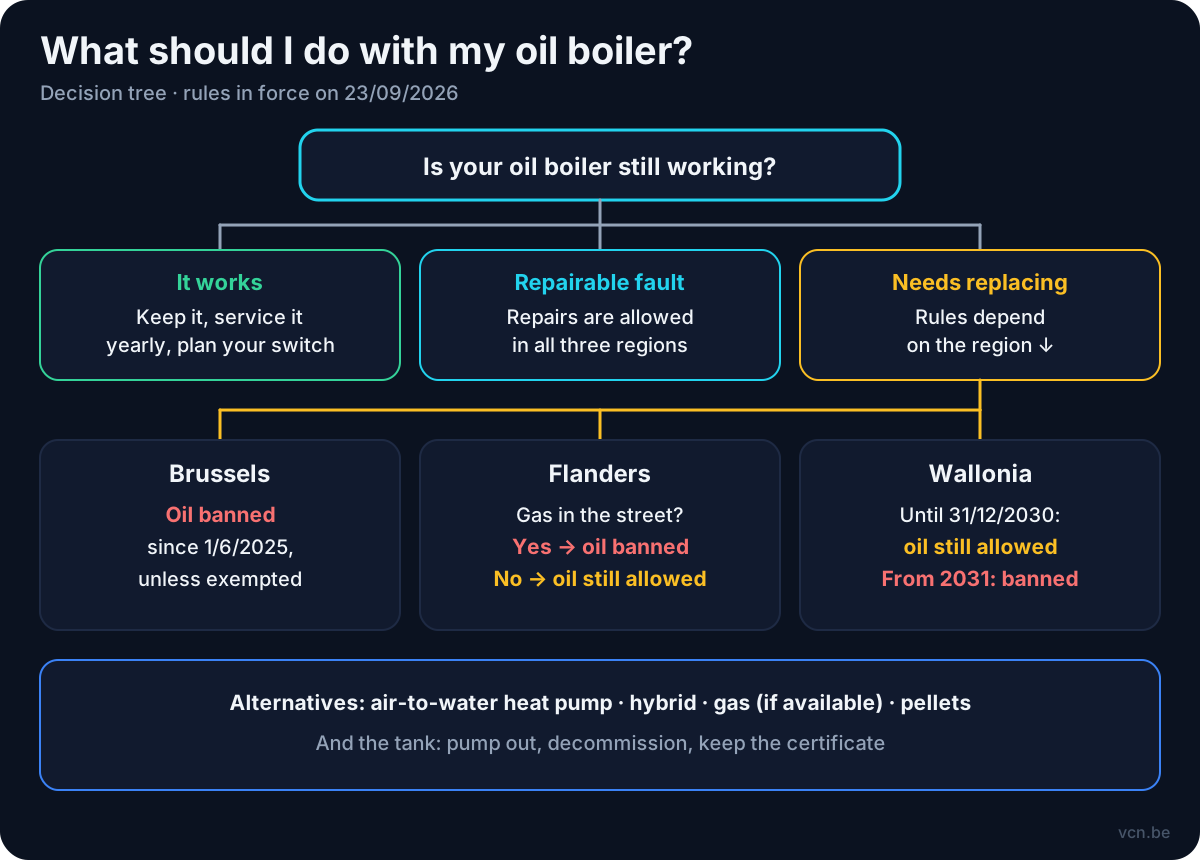
The best decision is the one you make before a breakdown: an emergency replacement in the middle of winter rarely leaves time to compare options.
- Know your situation: region, new or existing building, gas in the street or not (Sibelga, Fluvius, ORES or RESA can tell you).
- Assess the boiler: age, breakdowns, comments in the last service report.
- Assess the home: energy certificate (PEB/EPC), insulation, type of emitters.
- Get quotes for at least two alternatives, with properly calculated sizing.
- Schedule the works in spring or summer, outside the heating season.
- Deal with the tank: pump out, decommission, keep the certificate.
In Brussels and in Flanders with gas in the street, your next replacement will have to use another energy source: prepare it now. In Wallonia, installing an oil boiler remains legal until 31 December 2030, but do the maths: 21% VAT, no grants, and no oil replacement possible afterwards. Our boiler replacement page explains how the works are organised.
Planning your switch with a heating engineer
The end of heating oil does not condemn existing boilers, but it narrows your options at replacement time. A few months' head start lets you choose rather than improvise. VCN Energy services oil boilers and installs heat pumps, hybrid systems and gas boilers in Brussels, Walloon Brabant and Wallonia: book online, call 010 80 20 92 or e-mail [email protected].
Frequently asked questions
Do I have to replace my oil boiler in 2026?
No. As of September 2026, no Belgian region requires you to remove a working oil boiler: you can keep it, have it serviced every year and repaired. The bans concern installing a new oil boiler: in Brussels since 1 June 2025, in Flanders since 2022 where gas is available in the street, and in Wallonia in new buildings since 2026 and in existing buildings from 2031.
Is there an oil boiler ban in Brussels?
Yes. Since 1 June 2025, no oil boiler may be installed in the Brussels-Capital Region, not even to replace an old one and not even a second-hand unit. Exemptions are possible for technical, functional, economic or heritage reasons. An oil boiler that is already in place may keep running, provided it is serviced and inspected as required. New buildings may not use gas or oil heating either.
Can I still replace my oil boiler in Wallonia?
Yes, in an existing building, until 31 December 2030. In July 2026, Wallonia postponed to 1 January 2031 the ban on installing or replacing oil boilers in existing buildings, originally planned for 2026. The burner may be replaced until 31 December 2034. In new buildings, however, oil boilers have been banned since 1 January 2026. Exemptions are planned where no realistic alternative exists.
Can an oil boiler still be repaired?
Yes, in all three regions. The bans target installing or replacing the boiler, not repairs. In Wallonia, replacing the burner is explicitly allowed until 31 December 2034. In Flanders, however, replacing the boiler body counts as replacing the boiler. Before paying for a major repair on an old boiler, ask your technician whether the investment still makes sense compared with switching.
What should I do with my oil tank if I switch to a heat pump?
Have it decommissioned: pump out the remaining oil, degas and clean the tank, then remove it or, if that is impossible, fill it with sand or inert foam. Keep the certificate: it will be useful when you sell the property. In Brussels, notify the authority by registered letter before the works. In Flanders, a certified tank technician issues the certificate for buried tanks.
Are there grants to replace an oil boiler in 2026?
Not for a new fossil fuel boiler: since 2025, EU rules exclude grants for stand-alone gas or oil boilers. For a heat pump, Flanders offers Mijn VerbouwPremie, for example €1,500 for an air-to-water unit in income categories 1 and 2. Brussels Renolution grants are suspended, and Wallonia replaces its grants with the Rénopack loan from 1 October 2026. The 6% VAT rate on heat pumps remains a real saving.
Sources
- Ban on non-sustainable installations (PEB heating rules) — Brussels Environment
- New rules for more sustainable heating from 2025 — Brussels Environment
- Heating oil tank: what are your obligations? — Brussels Environment
- Buried heating oil tank — Brussels Environment
- Renolution grants — Brussels Environment
- Ban on installing and replacing oil boilers — Flanders.be (VEKA)
- Judgment 41/2023 of 9 March 2023 — Constitutional Court (via etaamb)
- Changes to Mijn VerbouwPremie from 2026 — Flanders.be
- FAQ on private heating oil tanks — Flemish Department of Environment
- FAQ for central heating users — Flemish Department of Environment
- Oil and coal boilers: a gradual transition from 2031 — SPW Énergie (Wallonia)
- Renovating Walloon buildings: a framework to reach PEB A by 2050 — Wallonie.be
- Walloon government press release, 16 July 2026 — Wallonie.be
- Walloon decree of 17 July 2003 on liquid fuel storage — Wallex
- Circular 2025/C/47: end of the reduced VAT rate for fossil fuel boilers — Forum for the Future
- VAT rates for heating boilers and heat pumps — Embuild Oost-Vlaanderen
- Directive (EU) 2024/1275 on the energy performance of buildings — EUR-Lex